
11 Accounting Certifications That Actually Boost Your Career in 2026

Estimated reading time: 13 minutes
You’re looking at accounting certifications because you already know—staying at your current level won’t cut it. The market has shifted. Automation handles routine work now, and 87% of finance and accounting leaders offer higher pay to candidates with specialized skills compared to those without them. The right certification can push your salary up by 15% to 63%, depending on which one you choose and how you use it.
This article covers 11 certifications that create measurable career changes. Some open doors to public accounting firms, others position you for corporate finance leadership, and a few give you the technical edge employers actually search for. You’ll see what each certification costs, how long it takes, and which roles it qualifies you for—no fluff, just the specifics you need to decide.
Key Takeaways
- Salary Impact: CPA holders earn 15% more than non-certified accountants, while CMA certification delivers a 63% premium over professionals without credentials
- Experience Matters: Mid-career professionals (3-5 years) with certifications can expect salaries between $75,000 and $110,000, especially with CPA or advanced credentials
- Market Demand: Public accounting, tax, audit and assurance roles show 3.7% above-average salary growth in 2026, driven by regulatory complexity and accountant shortage
- Global Recognition: CMA and CFA certifications offer international mobility, while CPA primarily serves US markets
Best Accounting Certifications for Career Advancement 2026
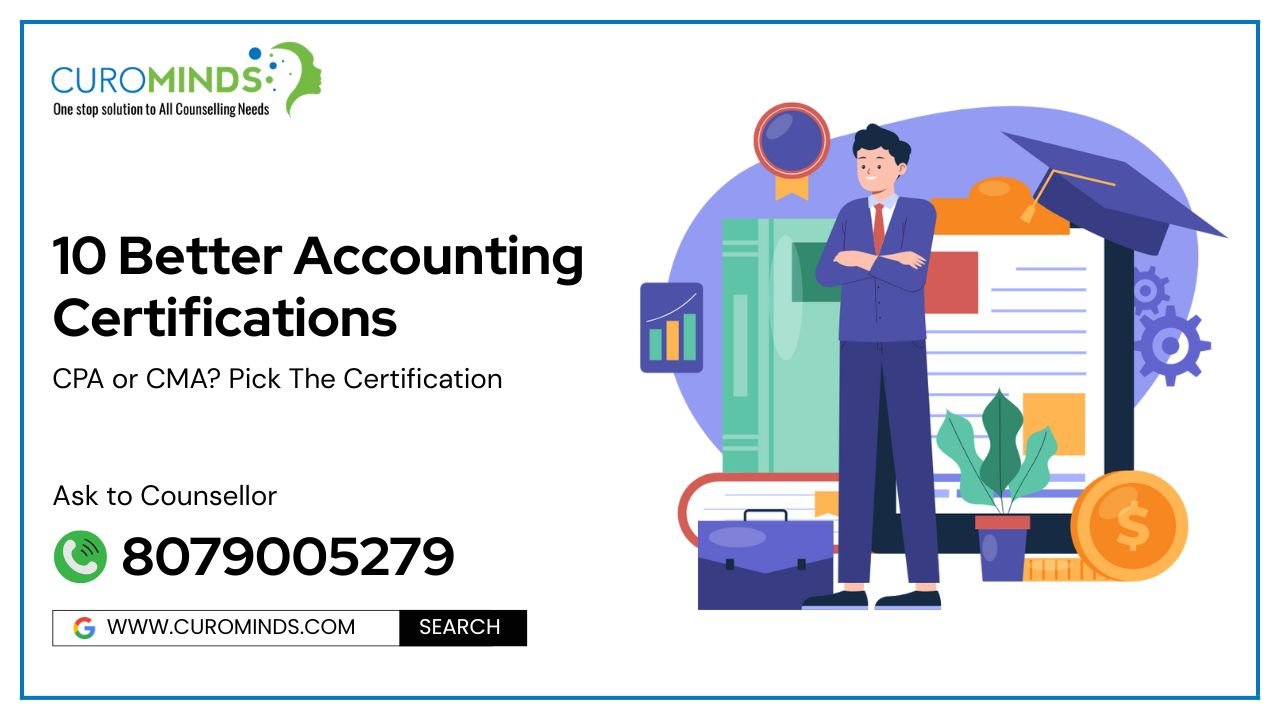
Choosing the right accounting certification depends on your career goals, current experience level, and salary expectations. The best accounting certifications for career advancement in 2026 offer 15-63% salary premiums over non-certified professionals, with total investment ranging from $500 to $5,500.
This comparison table shows the 11 most valuable certifications ranked by career impact, salary potential, and return on investment. Use it to identify which certification aligns with your 5-year career plan.
| Accounting Certifications | Best For | Avg Salary Range | Total Cost | Time to Complete |
| CPA (Certified Public Accountant) | Public accounting, audit, tax, opening own practice | $82,000-$129,000 | $2,053-$5,453 | 1-2 years |
| CMA (Certified Management Accountant) | Corporate finance, CFO track, strategy roles | $76,000-$133,000 | $2,000-$3,000 | 1-3 years |
| CFA (Chartered Financial Analyst) | Investment analysis, portfolio management, wealth management | $126,000-$177,000 | $3,000-$4,500+ | 4+ years |
| CIA (Certified Internal Auditor) | Internal audit, risk management, compliance | $64,000-$95,000 | $1,500-$2,500 | 1-2 years |
| EA (Enrolled Agent) | Tax preparation, IRS representation, tax consulting | $55,000-$75,000 | $500-$1,200 | 6-12 months |
| CFE (Certified Fraud Examiner) | Fraud investigation, forensic accounting, compliance | $70,000-$95,000 | $350-$600 | 6-12 months |
| CGMA (Chartered Global Management Accountant) | Strategic business advisor, management accounting | $85,000-$155,000 | $1,200-$2,000 | 1-2 years |
| CISA (Certified Information Systems Auditor) | IT audit, cybersecurity, systems control | $95,000-$115,000 | $575-$1,000 | 6-12 months |
| CB (Certified Bookkeeper) | Entry-level bookkeeping, accounts payable/receivable | $35,000-$50,000 | $300-$800 | 3-6 months |
| QuickBooks Certification | Small business accounting, bookkeeping software | $38,000-$55,000 | $300-$600 | 2-4 months |
| Basic Accounting Certificate | Entry-level accounting clerk, foundational skills | $35,000-$48,000 | $10,800 (full program) | 3-6 months |
1. CPA (Certified Public Accountant)
The CPA opens more doors than any other accounting certification. It’s mandatory for signing audit reports, opening your own practice, and handling tax matters for clients. As of 2025, CPAs earn between $82,000 and $129,000, with significant regional variations.
What it covers: Auditing, financial accounting, regulation, and tax. The exam tests your ability to handle compliance, identify risks, and apply accounting standards across different business scenarios.
Requirements:
- Bachelor’s degree with 150 credit hours (varies by state)
- Pass four exam sections within 18 months
- 1-2 years of verified accounting experience under a licensed CPA
- Total cost ranges from $2,053 to $5,453, including exam fees, application, and review materials
Career options: Public accounting firms, corporate controllers, tax consultants, forensic accountants, government auditors, financial advisory roles.
Real advantage: You can practice public accounting, which means working independently or in firms serving multiple clients. This flexibility doesn’t exist with other certifications.
2. CMA (Certified Management Accountant)
CMA holders specialize in strategic decision-making within organizations. This certification focuses on using financial data to drive business outcomes rather than external reporting. CMAs earn between $76,000 and $133,000, particularly in corporate environments.
What it covers: Financial planning, analysis, decision support, cost management, internal controls, and performance management. The focus is forward-looking rather than historical reporting.
Requirements:
- Bachelor’s degree (any field)
- Two years of professional experience in management accounting or financial management
- Pass two exam parts within three years from program acceptance
- Total cost approximately $2,000-$3,000 including IMA membership and study materials
Career options: Financial analyst, budget manager, corporate controller, CFO, cost accountant, treasury manager, business strategist.
Real advantage: The CMA is a global designation recognized worldwide, making it valuable if you’re targeting multinational companies or considering international opportunities.
3. CFA (Chartered Financial Analyst)
CFA takes you beyond traditional accounting into investment analysis, portfolio management, and financial markets. CFAs achieve salaries ranging from $126,000 to $177,000, especially in investment roles.
What it covers: Portfolio management, investment analysis, ethics, economics, equity investments, fixed income, derivatives, alternative investments, quantitative methods.
Requirements:
- Bachelor’s degree or equivalent work experience
- Pass three exam levels with approximately 300 study hours per level
- Four years of qualified investment work experience
- Agreement to CFA Institute Code of Ethics
Career options: Portfolio manager, research analyst, risk manager, investment banker, wealth manager, hedge fund analyst.
Real advantage: Only 150,000 CFA charterholders exist worldwide, making it highly specialized compared to 664,000+ active CPAs. This scarcity creates premium positioning in investment roles.
4. CIA (Certified Internal Auditor)
CIA is the only internationally accepted distinction for those seeking an internal auditor career. It demonstrates competencies in risk management, governance, and internal controls within organizations.
What it covers: Internal audit essentials, governance and risk management, audit technology and analytics, and business acumen.
Requirements:
- Bachelor’s degree
- Two years of internal audit experience (master’s degree can substitute one year)
- Pass three exam parts totaling 6.5 hours
- Continuing education requirements
Career options: Internal auditor, audit manager, chief audit executive, risk manager, compliance officer, governance advisor.
Real advantage: The global recognition makes CIA valuable for professionals working in multinational corporations or planning international moves.
5. EA (Enrolled Agent): Tax Specialist
Enrolled Agents represent taxpayers before the IRS. This certification focuses exclusively on tax—nothing else. It’s particularly valuable if you want to specialize in tax preparation, planning, and representation without pursuing the broader CPA credential.
What it covers: Individual taxation, business taxation, representation, practices, and procedures before the IRS.
Requirements:
- Either five years of relevant IRS experience or passing score on the three-part Special Enrollment Examination (SEE)
- Background check
- No specific educational requirements
- 72 hours of continuing education every three years
Career options: Tax preparer, tax consultant, tax resolution specialist, representation before IRS, tax planning advisor.
Real advantage: No bachelor’s degree requirement makes this accessible if you have tax experience but lack traditional educational credentials. The specialization creates strong demand during tax season and year-round for businesses.
6. CFE (Certified Fraud Examiner)
CFE professionals detect and prevent fraud. This certification combines accounting knowledge with investigative skills, legal knowledge, and criminology.
What it covers: Fraud prevention, detection, investigation, financial transactions, fraud schemes, law, and criminology.
Requirements:
- Bachelor’s degree (or equivalent professional experience)
- Two years of fraud-related professional experience
- Pass four-part exam
- 20 CPE credits per year, with 10 in fraud detection and deterrence and two in ethics
Career options: Fraud examiner, forensic accountant, compliance investigator, loss prevention specialist, financial crime analyst.
Real advantage: This certification verifies abilities in forensic accounting, risk management, and compliance, which are increasingly critical as regulatory scrutiny intensifies globally.
7. CGMA (Chartered Global Management Accountant)
CGMA is available to accountants worldwide and demonstrates management accounting skills needed for high-level positions in business or government. It requires knowledge beyond financial accounting—operations, strategy, and management best practices.
What it covers: Management accounting, financial planning, performance management, strategic management, digital business transformation.
Requirements:
- Three years of relevant work experience
- AICPA membership (for US professionals)
- Complete online certification program
- Pass CGMA exam
Career options: Strategic business advisor, management accountant, business partner, operations analyst, corporate strategist.
Real advantage: The certification emphasizes business strategy over technical accounting, positioning you as a business partner rather than traditional accountant.
8. CISA (Certified Information Systems Auditor)
CISA focuses on auditing, controlling, monitoring, and assessing information technology and business systems. Average US salary reaches around $106,267 per year.
What it covers: Information system auditing, governance and management, information systems acquisition and implementation, operations and resilience, protection of information assets.
Requirements:
- Five years of work experience in IS audit, control, or security (substitutions available)
- Pass CISA exam
- Adhere to Code of Professional Ethics
- Continuing professional education
Career options: IT auditor, information security auditor, risk and compliance auditor, systems analyst, cybersecurity consultant.
Real advantage: Technology skills combined with accounting knowledge create unique value as businesses face increasing cyber threats and data governance requirements.
Beginner-Friendly Options: Starting Your Certification Journey
If you’re new to accounting or don’t meet the requirements for major certifications yet, these entry-level options build foundational skills:
Certified Bookkeeper (CB)
Basic accounting principles, bookkeeping fundamentals, adjusting entries, payroll, and financial statements. Many community colleges offer accounting certificate programs qualifying you for bookkeeping jobs or entry-level corporate accounting roles.
Time: 3-6 months Cost: $300-$500 per credit, approximately $10,800 total for full program Career entry: Accounting clerk, bookkeeper, payroll clerk, accounts payable/receivable clerk
QuickBooks Certification
Software-specific certification demonstrating proficiency in QuickBooks accounting software. Practical skill that employers value for small business and corporate accounting roles.
Time: 2-4 months Cost: $300-$600 Career entry: Bookkeeper, accounting assistant, small business accountant, QuickBooks consultant
Your Final Take
The certification you choose sets your career direction for the next 5-10 years. CPA maximizes flexibility across public and private sectors in the US. CMA positions you for corporate leadership with global mobility. Specialized certifications like CFA, CIA, CFE, and CISA create expertise that commands premium compensation in specific domains.
As we moved into 2026, the message for accounting professionals is clear: earning potential is directly tied to professional development. The accountant shortage isn’t ending soon, which means certified professionals with specialized skills continue gaining leverage in salary negotiations and career advancement.
Start with your career destination—where do you see yourself in 5 years? That answer points to which certification delivers the highest return on your investment.
FAQs
CMA certification translates to a 63% premium in compensation over professionals without a CMA, while CPA earns 15% more than non-certified accountants. However, late-career CMAs typically out-earn CPAs in corporate settings. The highest-earning certification depends on your career path—CFA leads for investment roles at $126,000-$177,000.
Yes, but it’s demanding. CPA and CMA Exams both test financial reporting and controls, meaning studying for one can reinforce the other. Many professionals earn CPA first, then add CMA for corporate mobility or specialized certifications like CFE for niche expertise. Plan for 300-600 hours of total study time if pursuing two major certifications.
Not always. Most states require 150 credit hours for CPA, which typically means a master’s degree, though some allow this through bachelor’s plus additional coursework. CMA requires only a bachelor’s degree in any field. EA requires no degree if you have IRS experience. Check specific certification requirements before pursuing graduate education.
Major accounting certifications (CPA, CMA, CFA, CIA, EA) have standardized exams administered by recognized bodies—not “online certification programs.” What you can do online is exam preparation through review courses. Basic accounting certificates from accredited community colleges or universities offered online are legitimate for entry-level qualifications.
For general accounting, CMA is considered easiest major accounting certification for those with bachelor’s degree, since it has relatively high pass rate compared to CPA. For true beginners without degrees, Certified Bookkeeper (CB) or basic accounting certificate programs provide accessible entry points into the field.
Want personalized guidance on selecting the right accounting certification for your specific situation? Explore more career resources or connect with our career advisors who specialize in accounting and finance career development.