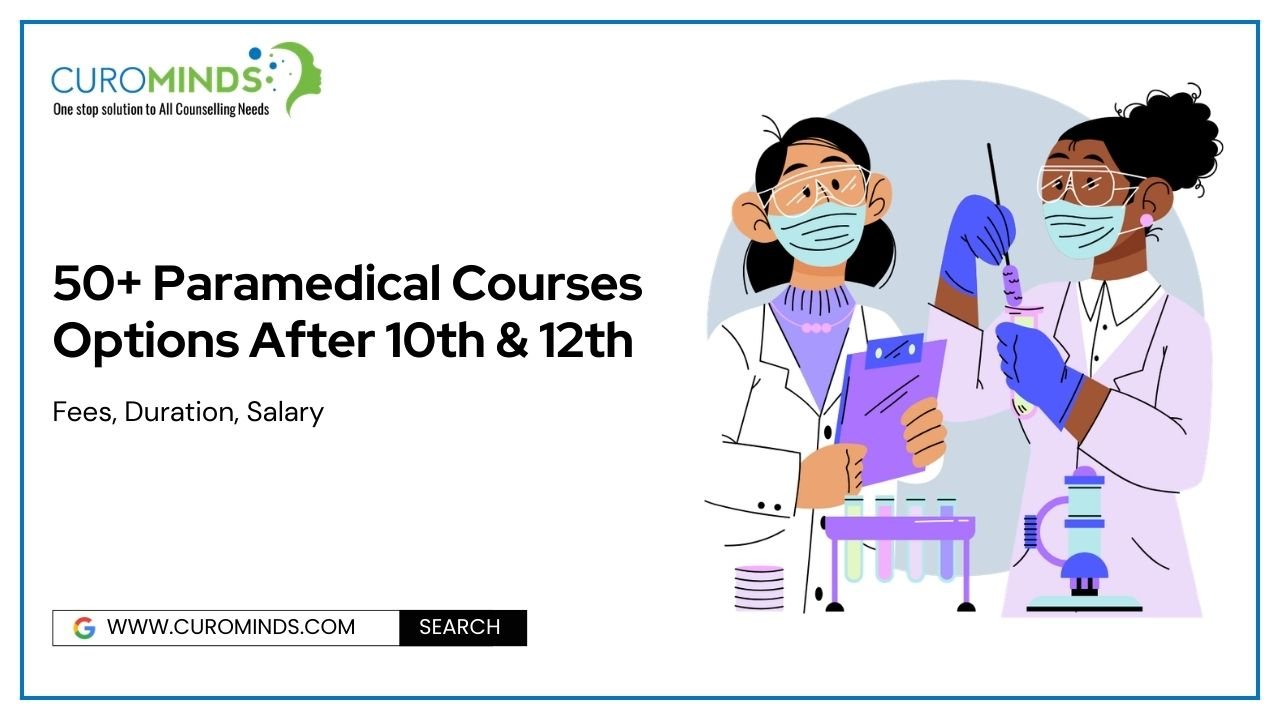

Paramedical Courses After 10th: Eligibility, Duration, Fees, Career Options

Estimated reading time: 13 minutes

Want to start working in a hospital right after 10th? Paramedical courses let you do that.
You don’t need to wait for 12th. You don’t need NEET. These courses train you for hospital jobs like lab technician, X-ray operator, or OT assistant.
The truth: You’ll start earning ₹10,000-₹18,000 per month. Work is hard. Hours are long. But jobs are available. And you can study further while working.
This article tells you everything—which courses to pick, real fees, actual salaries, and how to get admission.
What Are Paramedical Courses?
Paramedical means medical helper jobs. You support doctors and nurses.
What you learn:
- How to test blood and urine samples
- Operating X-ray machines
- Helping in surgeries
- Taking care of patients
- Emergency first aid
Course types:
- Certificate courses: 6 months to 1 year
- Diploma courses: 1 to 2 years
Most learning is practical. You work with real equipment. Less theory, more hands-on practice.
No entrance exam for most courses. Just pass 10th and apply.
Best Paramedical Courses After 10th
Here are courses you can do right after 10th:
| Paramedical Courses | Time | Fees | Starting Salary |
| Medical Lab Technician (MLT) | 6-12 months | ₹15,000-₹50,000 | ₹12,000-₹18,000/month |
| X-ray Technician | 6-12 months | ₹20,000-₹65,000 | ₹12,000-₹18,000/month |
| OT Technician | 1-2 years | ₹35,000-₹80,000 | ₹14,000-₹20,000/month |
| Dialysis Technician | 1-2 years | ₹30,000-₹70,000 | ₹16,000-₹24,000/month |
| Physiotherapy Assistant | 6-12 months | ₹25,000-₹75,000 | ₹15,000-₹22,000/month |
Medical Lab Technician (MLT)
What you do: Test blood, urine, and other samples. Find diseases through tests.
Where you work: Hospitals, pathology labs, diagnostic centers.
Daily work:
- Collect blood samples
- Run tests on machines
- Write reports for doctors
- Stand for 6-8 hours
Good part: Clean indoor work. No patient handling. Regular hours.
Hard part: Must be very careful. One wrong report = wrong treatment.
Job reality: Easy to find jobs. Every hospital needs lab technicians. Starting salary ₹12,000-₹18,000. After 3 years, can earn ₹25,000-₹30,000.
X-ray Technician
What you do: Take X-rays of patients. Operate X-ray machines.
Where you work: Hospitals, clinics, diagnostic centers.
Daily work:
- Position patients for X-rays
- Operate X-ray equipment
- Develop and check images
- Work with radiologists
Good part: Good demand. Can learn CT and MRI later. Salary grows with experience.
Hard part: Radiation exposure. Must wear safety gear. Sometimes heavy patient lifting.
Job reality: Start ₹12,000-₹18,000. With CT/MRI training, earn ₹30,000-₹40,000.
Operation Theatre (OT) Technician
What you do: Help doctors during surgery. Prepare surgical instruments. Keep OT clean and ready.
Daily work:
- Sterilize instruments
- Arrange equipment for surgery
- Assist surgeons
- Maintain OT cleanliness
Good part: Direct involvement in surgeries. Life-saving work. Respect in hospitals.
Hard part: Long surgeries. Stand for hours. Night shifts. Emergency calls anytime.
Job reality: Hospitals always need OT staff. Start ₹14,000-₹20,000. After experience, ₹25,000-₹35,000.
Dialysis Technician
What you do: Operate kidney dialysis machines. Help kidney patients.
Daily work:
- Set up dialysis machine
- Monitor patients during treatment
- Clean and maintain equipment
- Record patient data
Good part: Growing field. Diabetes increasing = more kidney patients. Good job security.
Hard part: 3-4 hour sessions with each patient. Can’t leave mid-treatment.
Job reality: Dialysis centers opening everywhere. Start ₹16,000-₹24,000. Can earn ₹40,000-₹50,000 with experience.
Physiotherapy Assistant
What you do: Help physiotherapists. Give exercise treatment to patients.
Daily work:
- Guide patients in exercises
- Use therapy equipment
- Help with pain relief treatments
- Maintain therapy equipment
Good part: Clean work. Patient interaction. Respect from patients.
Hard part: Physical work. Helping patients move. Standing all day.
Job reality: Clinics, hospitals, sports centers hire. Start ₹15,000-₹22,000.
Certificate vs Diploma - Which is Better?
Certificate Courses (6-12 months)
Good points:
- Quick completion
- Low fees
- Start earning fast
- Learn one skill well
Problems:
- Lower salary
- Fewer job options
- Less respect
- Hard to grow
Who should do: Students who need to earn urgently. Want to test the field first.
Diploma Courses (1-2 years)
Good points:
- Better salary
- More job options
- Hospital preference
- Can grow to senior posts
Problems:
- Takes longer
- Costs more
- Need more patience
Who should do: Students who can wait. Want better career. Can afford fees.
Simple rule: If you can, do diploma. Better long-term.
Eligibility for Paramedical Courses After 10th
Basic requirements:
- Pass 10th standard from a recognized board
- Physics, Chemistry, and Biology as core subjects (preferred but not always mandatory)
- Minimum 50% marks (varies by institute)
- Age between 15-25 years (varies by course)
Some institutes accept students from any stream. But having science subjects helps you understand medical concepts better. Chemistry, physics, and biology must be the core subjects during 10+2 level for most paramedical courses. However, certificate courses after 10th may have more relaxed requirements.
No entrance exam needed: Most diploma and certificate courses don’t require entrance exams. This removes one major barrier. You focus on your 10th board exam scores.
Medical fitness: Some institutes require a basic health checkup. You must be physically fit to handle clinical work. No serious infectious diseases or disabilities that prevent patient handling.
Course Duration for Paramedical Courses After 10th
Certificate Courses (6-12 months)
Certificate paramedical course fees vary between ₹1,000-₹10,000 in government institutes. Private institutes charge ₹15,000-₹50,000. These short programs get you working fastest.
Certificate courses focus on one specific skill. Limited theory, maximum practical work. Good if you want to start earning quickly or explore the field before committing long-term.
Diploma Courses (1-2 years)
Diploma paramedical course fees range from ₹7,000-₹1,00,000 depending on institute type and location. Government colleges cost less. Metro city private colleges charge the most.
The average fee for diploma paramedical courses generally sits around ₹50,000. Diploma gives you deeper knowledge. Better placement opportunities. Higher starting salaries compared to certificates.
Fee Structure for Paramedical Courses After 10th
Government institutes Fees:
- AIIMS charges ₹10,000-₹15,000 total for paramedical programs
- State ITIs charge ₹1,000-₹7,000 per year
- Limited seats, tough competition
- Better recognition, strong placement records
Private institutes Fees:
- Fees range ₹30,000-₹1,00,000 per year
- More seats available, easier admission
- Quality varies significantly between institutes
Hidden costs: Add hostel (₹2,000-₹5,000/month), books (₹5,000-₹10,000), uniforms (₹3,000-₹5,000), and practical training materials. Budget 20-30% extra beyond tuition fees.
Admission Process for Paramedical Courses After 10th
Step 1 – Research institutes: Check government ITIs, state paramedical boards, and private institutes. Verify recognition from State Medical Faculty or NSDC. Unrecognized certificates won’t get you jobs.
Step 2 – Check eligibility: Visit institute websites for specific requirements. Some courses need biology. Others accept any stream. Age limits vary.
Step 3 – Application submission:
- Fill online or offline forms
- Attach 10th marksheet, birth certificate, identity proof
- Pay application fee (₹200-₹1,000)
- Submit before deadline
Step 4 – Merit list or interview: Most institutes publish merit lists based on 10th percentage. Some conduct personal interviews. Prepare to explain why you want this career.
Step 5 – Document verification: Bring originals—marksheets, transfer certificate, caste certificate (if applicable), residence proof, passport photos.
Step 6 – Fee payment and enrollment: Pay first-year fees within deadline. Collect ID card, uniform details, and class schedule.
Top Paramedical Institutes After 10th
Government Institutes
All India Institute of Medical Sciences (AIIMS)
- Multiple AIIMS across India offer paramedical programs
- Admission through AIIMS paramedical entrance exam
- Strong placement in government hospitals
- Highly competitive—requires excellent 10th marks
Regional Paramedical Institutes
- Every state has government paramedical training centers
- Usually affiliated with state medical universities
- Lower fees, local language instruction available
- Good for students who prefer staying close to home
Industrial Training Institutes (ITIs)
- Government ITIs in most districts offer paramedical trades
- Very affordable, practical-focused training
- Recognized by NSDC and state skill development missions
- There is acute shortage of radiographers, ECG technician, OT technician and audio motorists in the country, making ITI-trained professionals valuable
Private Institutes
Check these factors before joining private institutes:
- Affiliation with recognized medical universities
- Hospital tie-ups for practical training
- Placement cell and past placement records
- Faculty qualifications and industry experience
- Lab and equipment quality
Warning signs: Promises of 100% placement without hospital partnerships. No proper lab facilities. Faculty without clinical experience. Always visit campus before paying fees.
Final Thoughts
Paramedical courses after 10th are not perfect. But they’re real.
You won’t become rich. You won’t get doctor’s respect. First salary will be ₹10,000-₹15,000.
But you’ll have a job at 18. You’ll work in hospitals. You’ll help save lives. And you can study further while earning.
FAQs
Becoming a doctor after paramedical courses is feasible, but you’ll need to complete a medical degree program to obtain an MD or MBBS degree. You must complete 12th with PCB, clear NEET, and pursue MBBS—the paramedical qualification doesn’t provide any shortcuts.
Radiologist, Audiologist, MRI technologist, physical therapist, and Ultrasonographer are among the highest paying paramedical careers. However, these require bachelor’s or master’s degrees. After 10th, focus on getting a diploma, then pursue higher education for these high-paying roles.
No, full radiology courses need 12th qualification. After 10th, you can only do basic X-ray technician certificates. For proper radiology training including CT and MRI, you need to pass 10+2 from a recognized board with Physics, Chemistry and Biology.
Paramedical courses include subjects taught in classes 11 & 12 like Biology, Anatomy, Physiology. If you haven’t studied these in 10th, initial theory is challenging. But courses are mostly practical-based. With attention during training, most students manage well.
Yes, but opportunities are limited compared to diploma or degree holders. You typically start as assistants or junior technicians. Career growth is slower. Many hospitals prefer minimum diploma qualification for patient-facing roles.
Basic theory can be learned online. But paramedical work requires hands-on training in labs and hospitals. Fully online courses won’t get you hired. Hybrid courses with online theory and in-person practicals from recognized institutes are acceptable.